What is Estate Tax and How it can hurt you even After Death? Part 1 of Estate Planning 101
By Dr. Pinky Intal · Originally published March 11, 2015. Rules and rates may have changed since then.
Remember, Paul Walker? Who starred in “The Fast and the Furious” and died last 2013 due to a car accident? He died with total net assets of $25M (or PHP 1.1 B). His total estate tax that is needed to be settled by his only daughter who is only a 16-year-old minor is 35% of that, which is $8M (or PHP 360M).
So, if you ask me? What the hell if Estate Tax?
Isn’t the same with Income tax? Is monthly, quarterly and yearly filing of ITR not enough?
Here is the answer:
During one’s lifetime, we work to provide for our family’s needs and we work even harder to provide the things we are proud to say we can pass on to our children. From there, we have accumulated houses, cars, business properties, stocks, back accounts, jewelry etc. All are called assets when we are alive. But when suddenly, something happens to us, all that assets we have accumulated will now be called, ESTATE.
That is where “Estate Tax” will come into the picture.
So, What is an Estate Tax?
Estate tax. A tax on the transfer of the net estate of the decedent. (Tax Reform Act of 1997, Sec. 84)
Meaning, you will be taxed from the meer transfer of your wealth and properties from you to your family.
In simple illustration:
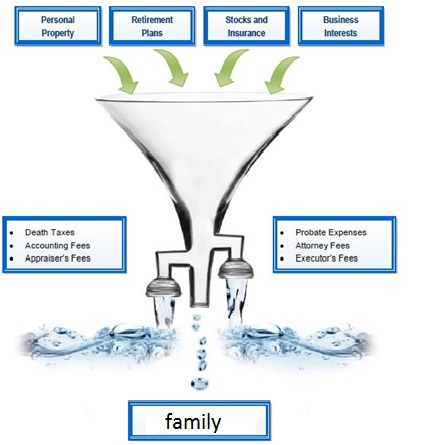
Picture from: itfp.com
In the above illustration, it clearly indicates what will happen to your assets in case of death. Everything you own, will be added together, minus some tax exemptions, equals total assets to be taxed.
If you wonder how much is taxed? Look at the estate table below: this is taken from www.bir.gov.ph
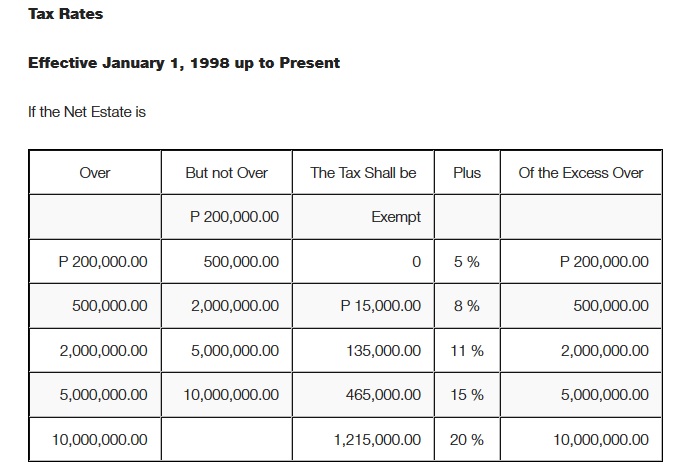
If you have a Net Estate of, for example, PHP 20,000,000. How much is the estate tax?
First 10M = 1,215,000
Excess of 10M = 10M (20%) = Php 2,000,000
Total Estate Tax = 1,215,000 + 2,000,000 = PHP 3,215,000
Wow, that is a big amount of money by just the transferring of your wealth to your beneficiaries.
The trouble is, what if, that 20M pesos is not in the form of Cash? But in a form of properties, like, your house, cars, stocks and your business? What will your heirs do? Sell the properties you carefully put up just to pay for the transfer of your estates to their names?
Take note, equally burdensome are these facts:
1. Estate tax is payable only in Cash.
2. The estate tax should be filed within six (6) months from decedent's death or else a 25% charge will be imposed.
3. Estate tax not filed and settled within the prescribed period will be charged 20% yearly until it is settled.
4. Willful neglect and fraud in filing the estate tax will give surcharge of 50%.
5. Your money in banks cannot be used in paying your estate tax dues because of this tax law:
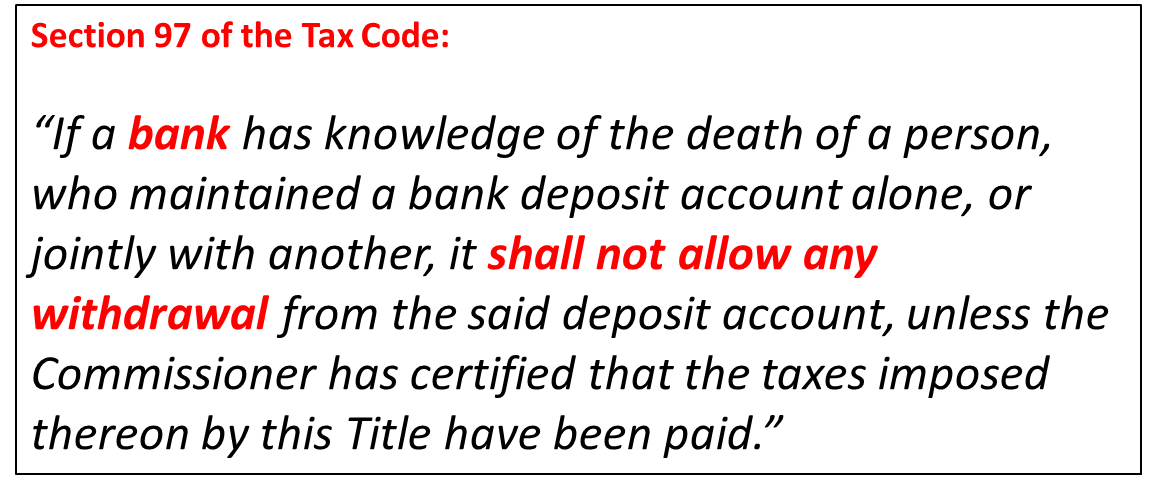
This only means, even if you have enough money in the bank to pay for the estate tax dues, it cannot be used in paying for your estate tax dues because all your bank accounts or even your money in all your investments (mutual funds, stock market, time deposit) will all be frozen in the time of death.
What will unfreeze it?
The Answer is still: Your payment of your estate tax dues.
More estate tax tragic incidents are as follows:
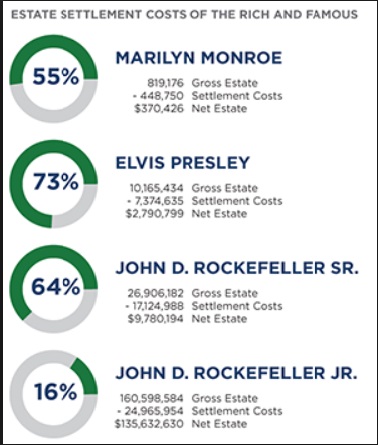
Illustration from: walterreyna.com
If you could take a look, John D. Rockefeller Jr, has the most estate, but paid the least estate tax? How is that possible?
Proper Estate planning is essential knowledge while building your wealth. It is making sure the wealth you are building will go to your family and not to the estate tax.
Once you have accumulated your wealth, it's time to protect it and make sure it stays with you and your family.
Part 2 of this post will be about the different ways on how to properly plan your Estate and making sure will not make you wake from your grave.
“Steps in Making Sure, your Wealth stays with your Family, even after you are gone.”
Seeking some help in Estate Planning? Ask me. Click here.
Gentle reminder from your Estate Planner,

More good reads:
- Part 1: What is Estate Tax and How it can hurt you even After Death?
- Part 2: Estate Tax Settlement Options: What to do to Protect your Wealth?
- Part 3: What to do to Protect and Conserve your Wealth?: Part 3 of Estate Planning 101
- Part 4: Giving your Wealth too Soon? How will that hurt you too?
- Part 5: The Real Benefits of Estate Planning
If you have any questions: take your time to email me of your queries, here.
Sources:
http://www.bir.gov.ph/index.php/tax-information/estate-tax.html#et6